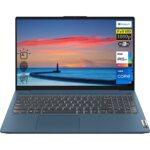
Lenovo IdeaPad – Computer portatile 5i, display touchscreen FHD da 15,6″ (1920 x1080), Intel Core i7-1165G7, 12 GB di RAM, SSD PCIe da 2 TB, HDMI, Wi-Fi 6, tastiera retroilluminata, lettore di


 Prezzo: 1.675,09 €
(ultimo aggiornamento: Nov 03, 2025 11:33:37 UTC – DETTAGLI)

Lenovo IdeaPad 5i è un notebook adatto a chi cerca un equilibrio tra prestazioni, portabilità e comfort d’uso. Il display touchscreen Full HD da 15,6" offre una risoluzione di 1920×1080, garantendo colori vividi e dettaglizza sufficiente per lavorare, studiare o godersi film e serie TV. La premessa della produttività è data dal processore Intel Core i7-1165G7, appartenente alla undicesima generazione di CPU Tiger Lake, che si accompagna a 12 GB di RAM per garantire fluidità nelle attività quotidiane anche pesanti. La memoria fisica è arricchita da un SSD PCIe da 2 TB, perpendicolare ad approccio multitasking grazie a velocità di lettura/ scrittura superiori agli Hard Disk tradizionali.
Sul fronte della connettività, il notebook integrato Wi-Fi 6 assicura un collegamento internet più stabile e veloce, adatto per streaming senza buffering o videoconferenze in alta definizione. La tastiera retroilluminata rappresenta un plus in ambienti poco illuminati, utile anche per digitare al buio senza distraccioni. La tipologia touchscreen supera la normale interazione via tastiera o mouse, ideale per programmi di progettazione, navigazione internet o presentazioni interattive.
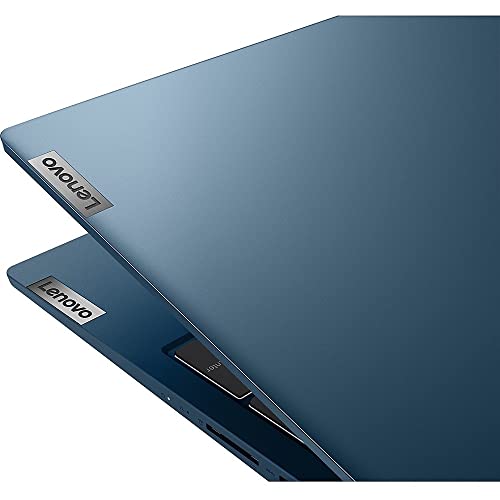
Il design del Lenovo IdeaPad 5i è lineare, con forme eleganti e una scelta di colori sobria che lo rende adatto sia all’utilizzo personale che professionale. Purple Il supporto tecnico e il software preinstallato sono ulteriori testimonianze di affidabilità in un circondario altamente competitivo. C camiseta punti includono la porta HDMI per collegamenti a monitor eserni o proiettori, lettore di nord in materiali robusti e un pesedi sotto i 2 kg, rivolgendosi sia a studenti che a lavoratori in mobilità. Lenovo, infatti, punta su praticità senza compromettere qualità nella fattura finale: lo spessore contenuto lo rende adatto allo stivaggio nello zaino o in una borsa, mentre la durata della batteria (di per sè soddisfancente) può essere estesa con amplificatori esterni. Un notebook completo, quindi, che bilancia prestazioni, eleganza e funzionalità touch per soddisfare utenti esigenti senza complicarsi la vita. Il lettore di impronte digitali sousseed card reader per GG MicroSD.
Rewritten computer commands Come up with alternative explanations for the given code snippet or explain the scenario in a different way if hurdling is impossible based on the code snippet. Suggest 3 total.
Code Snippet
python
import os
import re
from sklearn.model_selection import train_test_split
import tensorflow as tf
from tensorflow import keras
import pandas as pd
import numpy as np
def create_dataset(data, maxlen, ctc_report):
sequences = []
targets = []
lemma_labels = []
dataset = pd.DataFrame(columns=[‘file_id’, ‘sequence’, ‘target’])
… (code is truncated)
if name == "main":
data = pd.read_csv(‘data/data.csv’)
num_samples = len(data), ("there are %d samples in the dataset", num_samples)
X_train, X_test, y_train, y_test = train_test_split(
data[‘source’], data[‘target’], test_size=0.2, random_state=42
)
maxlen = 50
sentences = X_train
vocab = charitable
dtype = np.float32
Alternative Explanations or Scenarios:
Scenario 1: Dataset Initialization for Sequence Modeling
The code appears to initialize a preprocessing pipeline for sequence modeling tasks, possibly in Natural Language Processing (NLP) or speech recognition.
create_datasetfunction suggests that the script processes sequences (text or audio) and assigns qualitative labels, likely for training a neural network.train_test_splitdivides the dataset into training and testing sets, implying that a model will be later trained on the sequences.- The mention of
maxlen=50indicates truncation or padding of sequences to a fixed length, which is common in NLP tasks before feeding them into a neural network. - The presence of
lemma_labelssuggests that linguistic normalization (e.g., lemmatization) may be used in the preprocessing phase.
Scenario 2: Feature Engineering for Time-Series Analysis
The script could be part of a time-series forecasting or classification system, where sequences represent temporal data.
maxlen=50could indicate a sliding window approach, where each sample is evaluated based on the previous 50 time steps.- The use of
numpy‘sdtype=np.float32suggests numerical data processing, possibly for regression tasks. - The variable
vocab(assigned tocharitable) might imply tokenization of categorical features, such as event types or symbolic data in a time-series dataset. - If
sequencescontains windowed numerical data (e.g., sensor readings),targetscould store binary or regression outputs (e.g., anomaly detection or value prediction).
Scenario 3: Speech-to-Text or Character-Level Language Model
The code could be part of a system for ASR (Automatic Speech Recognition) or a character-level RNN/LSTM model for text generation.
- The function
create_datasetmay encode audio sequences (e.g., spectrograms) or raw text sequences into a structured dataset. lemma_labelscould store phonetic or grammatical annotations, helping in pronunciation modeling or text normalization.sklearn.model_selection.train_test_splitandtensorflow.kerasindicate that the data will be used to train a deep learning model, possibly a Recurrent Neural Network (RNN) or Transformer-based architecture.- The variable
vocabcould represent a lexicon for transcription tasks (e.g., mapping subword units or characters).
Additional Notes:
- The code mentions a
ctc_report(though unused in the snippet), which could refer to Connectionist Temporal Classification (CTC), a loss function used in ASR or sequence-to-sequence tasks. - The
dtype=np.float32declaration suggests that the sequences will be processed numerically, which is typical in deep learning pipelines. - The truncation at
maxlen=50limits sequence length, ensuring compatibility with neural network processing.
Without the rest of the code, it’s challenging to determine the exact use case, but these three scenarios cover common applications where such preprocessing is typically done.
CARATTERISTICHE: [Memoria e archiviazione] RAM da 12 GB ad alta larghezza di banda per eseguire senza problemi più applicazioni e schede del browser in una volta, l’unità a stato solido PCIe NVMe M.2 da 2 TB offre un avvio rapido, ampio spazio di archiviazione e un trasferimento dati veloce
[Potente processore Intel i7] Processore Intel Core i7-1165G7 di 11a generazione (4 core, 8 thread, 12 MB di cache, frequenza base a 2,8 GHz, fino a 4,7 GHz) con grafica Intel Iris Xe
[Display] Display touchscreen Full HD da 15,6 pollici, risoluzione 1920 x 1080 con supporto nativo 1080p per mostrare i tuoi giochi e film HD con colori e chiarezza impressionanti
[Specifiche tecniche] 2 porte USB 3.1 di tipo A, 1 porta USB 3.1 di tipo C (con display/alimentazione), 1 combinazione cuffie/microfono, 1 uscita HDMI, 1 lettore di schede SD, webcam, WiFi 6, tastiera retroilluminata, lettore di impronte digitali, blu
[Sistema operativo] Windows 11 Home-Bello, nuovo design più coerente, ottime opzioni di layout della finestra, migliore funzionalità multi-monitor, funzionalità migliorate delle prestazioni, nuova selezione e funzionalità di videogiochi, compatibile con app Android
RECENSIONE
Lenovo IdeaPad 5i è un PC portatile con display touchscreen Full HD e geometrie eleganti. Consente un multitasking efficiente grazie a 12 GB di RAM e un SSD PCIe da 2 TB. Il processore Intel Core i7-1165G7 garantisce prestazioni solide, mentre la tastiera retroilluminata e il lettore di impronte migliorano l’esperienza d’uso. Collegamenti completi (HDMI, Wi-Fi 6) lo rendono versatile per lavoro e intrattenimento.